

 By Kent Morgan
BnBCondo does not publish a management rate. That is a fact about its website, not a judgement about its price. Five of the eleven Thai operators we verified do publish one, which gives you a range to hold any quote against.
Everything below was read from BnBCondo’s own site in August 2026 and from our directory of Thai short-term rental managers. We compete with this company, so we have kept to what it says about itself.
Before the fee, though, there is a law. In Thailand the licence question can invalidate the whole letting model rather than merely add paperwork to it, and it is the first thing to settle with any manager here.
BnBCondo at a glance
| Item | Detail (as of August 2026) |
|---|---|
| Published rate | Not published |
| Coverage | Bangkok, centred on the Sukhumvit condominium corridor, and Hua Hin. |
| Service | Short-term rental management for third-party owners |
No rate published on the public pages.
Focused specifically on condominiums rather than villas, with its office in Phra Khanong among the high-rise developments it manages. States more than five years managing properties through Airbnb.
The Hotel Act decides more than the fee does
Under the Hotel Act B.E. 2547, accommodation let to transient guests for fewer than 30 consecutive nights is a hotel business and requires a hotel operating licence. A standard condominium unit does not have one.
Enforcement has been inconsistent and varies by building and by district, but the exposure is real and it falls on the owner. It is why the Thai market has two shapes of manager that barely exist elsewhere: those working only in buildings that already hold a licence, and those selling month-plus letting so the question never arises.
In Bangkok this is not a footnote, it is the central question. Almost all lettable stock here is condominium, which means almost none of it holds a hotel licence, which means the under-30-night rule applies to most of the city’s Airbnb inventory.
Add the building’s own juristic person, which can restrict short stays independently of national law, and you have two separate permissions to establish before anyone discusses a percentage.
Ask BnBCondo which of the two it is before you ask what it charges. A cheap commission on a letting model your building cannot legally support is not a saving.
What conventional commission management buys here
This is straightforward short-stay management: the operator markets the property, takes the bookings, handles the guests and takes a percentage of what comes in. It is the model most owners picture, and in Thailand it is the one most exposed to the licence question, because it depends on stays shorter than thirty nights.
The percentage is where the comparison usually starts and it should not be where it ends. Between the eleven Thai operators we verified, the same headline number covers meaningfully different jobs – some include cleaning coordination, linen and maintenance call-outs, some bill each separately, and one charges its percentage after the cleaning fee rather than on gross.
Write down what each quote actually includes before you compare the numbers. Two commission quotes five points apart can be the same money once the extras are counted, and occasionally the cheaper headline is the dearer year.
How much does BnBCondo charge?
BnBCondo quotes on enquiry. Ask for the rate in writing, and ask the same three questions you would ask an operator who publishes one.
- What is the base? Gross booking value, net of the platform’s commission, or net of cleaning. TananBnB charges after the cleaning fee; most charge on gross. On the same headline percentage that difference is real money.
- What is billed on top? Cleaning per turnover, linen, consumables, maintenance call-outs, photography. My Thai Buddy states cleaning at 800-1,200 THB a turnover and one-off photography at 2,000-3,000 THB, which is a usable benchmark whoever you hire.
- Is there a markup on repairs? Lofty Phuket states there is none – “what the contractor charges us is what you pay” – and requires owner sign-off above 5,000 THB. Ask everyone else the same question.
Work permits: the question Thai owners forget to ask
Housekeepers, gardeners and security working at your property need work permits, and employing people without them is an exposure that reaches the property owner rather than stopping at whoever did the hiring. Mr Property Siam states plainly that its on-site staff are vetted and work-permitted; that it is worth saying tells you it is not universal. Ask this company the same question and ask for the answer in writing.
BnBCondo vs One Fine BnB
| Line | BnBCondo | One Fine BnB |
|---|---|---|
| Published rate | Not published | Full Service 20% / Partner 10% |
| What the lower tier means | Unknown until quoted | Partner 10% is remote management; you keep your own local cleaner and on-site team |
| Onboarding | Ask | A one-time $500 onboarding retainer that funds setup – photography, listing creation, property prep |
| What the percentage is charged on | Ask | Rental revenue only – never the guest-paid cleaning fee, lodging or sales tax, or damage deposits |
| Who pays for cleaning | Ask | Guests, through the booking – turnover housekeeping costs the owner nothing |
| Contract | Ask | No long-term contract |
We are a management company and we compete with BnBCondo, so treat that table as our side of the argument and check theirs. What we will not do is publish a score out of five for a competitor we have never been a customer of – see our management FAQ for how we think about fees generally.
A worked example, in baht
BnBCondo publishes no rate, so run the market against your own property instead. My Thai Buddy publishes the only complete Thai worked example we found – a one-bedroom Bangkok condo taking 50,000 THB a month with 6,000 THB of cleaning – and the published Thai range of 12% to 20% turns that into:
- Gross bookings: 50,000 THB in the month
- At 12%, the lowest published Thai rate: 6,000 THB commission, leaving 38,000 THB
- At 17%: 8,500 THB commission, leaving 35,500 THB
- At 20%, the Thai norm: 10,000 THB commission, leaving 34,000 THB
- Spread across the year: roughly 48,000 THB between the ends of the range
In plain English: eight points of commission is about 48,000 THB a year on a property like this. That is worth asking about – and it is also small enough to be wiped out by one difference in what the fee includes.
Which is the point. A lower rate with cleaning, linen and maintenance billed separately can cost more than a higher one that includes them. Lofty Phuket makes exactly that argument about its own island, saying most Phuket companies charge more than 20% once the extras are counted. Compare the total, not the percentage. Figures above are worked from published rates on one published example, not measured on your property.
Where BnBCondo’s pricing sits against the rest of the Thai market
BnBCondo publishes no rate, so there is nothing to place in this table directly. What it does give you is the range any quote from this company should be held against – these are the five Thai operators that do publish, read off their own sites in August 2026:
| Company | Published rate | Commission on 50,000 THB |
|---|---|---|
| Property Management Phuket | 12% | 6,000 THB |
| TananBnB | 15% | 7,500 THB |
| Guests365 | 17% | 8,500 THB |
| My Thai Buddy | 20% | 10,000 THB |
| Lofty Phuket | 20% | 10,000 THB |
| One Fine BnB | 20% full service / 10% partner | 10,000 / 5,000 THB |
What BnBCondo discloses, and what it leaves for the call
How much a company says about itself in public is not the same as how good it is, but it does tell you how much homework you can do before you pick up the phone. Here is what this one puts on its own site:
| What we looked for | On its own site |
|---|---|
| A management rate | No – quoted on enquiry |
| Scale, in its own words | Not stated |
| Performance figures | Not stated |
| How the model works | Explained in detail |
| What sits outside the fee | Not itemised publicly |
1 of the five answered in public. The rest is a phone call – which is normal, and is also why it is worth writing down what you want to know before you make it. Performance figures, where a company publishes them, are always its own numbers about its own portfolio and are reproduced here as such.
Four things to settle in writing before you sign
Most disputes are not about the percentage. These four are the ones specific to letting in Thailand:
- The letting model and your building’s licence position. This outranks everything else on any Thai contract.
- The base the fee is charged on. Gross, net of platform commission, or net of cleaning – all three are in use here.
- Whether on-site staff are work-permitted, and who employs them.
- Whose account holds the listing, and therefore who keeps the reviews when you leave.
The rest – owner stays, maintenance authority, payout timing, notice – is the same everywhere and is covered in our management FAQ.
What no management fee covers here
Common area fees on a condominium, insurance written for short-term letting, and furnishing replacement – a tropical climate and guest turnover wear a property faster than a tenant does. None of these pause out of season.
Tax on rental income sits outside the fee too, and how it is assessed depends on how you hold the property and where you are resident – a question for a Thai accountant rather than a manager. So does your own compliance position under the Hotel Act, which no operator can sign away on your behalf.
Is a guaranteed monthly income a better deal?
Two operators in our Thai directory offer one instead of a commission – Property Management Phuket calls it a Net Guarantee, MyBnbFactory a Monthly Rental Guarantee. The trade is the same in both cases and worth stating plainly: you swap the upside for certainty.
The operator absorbs the vacancy risk and keeps whatever the property earns above your fixed payment. In a market with a sharp season – which describes most of Thailand – a good year under a guarantee pays you the same as a bad one.
That is exactly right for an owner who needs to forecast a mortgage and exactly wrong for one who bought for the yield. What it is not is a cheaper form of management, and it should never be compared against a percentage as though it were.
The Thai market this company is working in
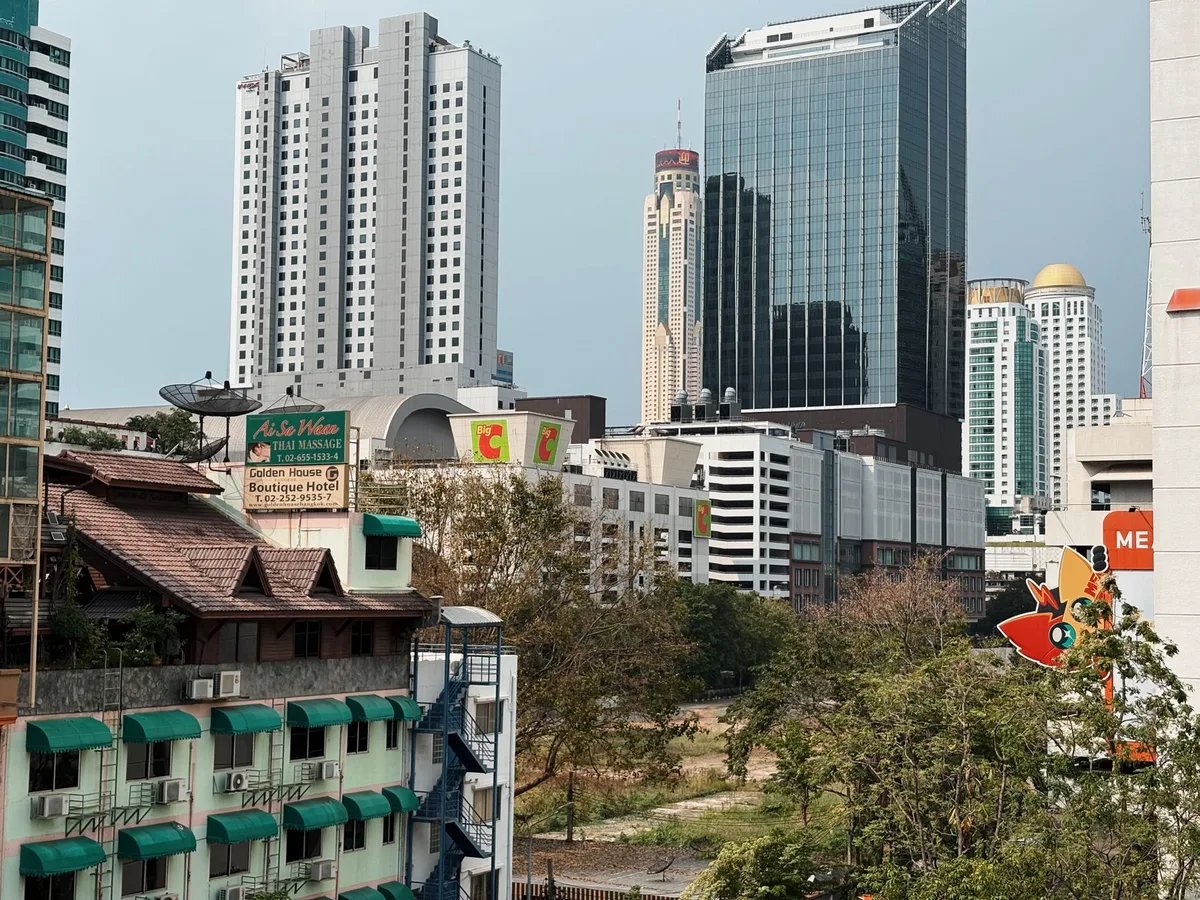
Bangkok is a condominium market almost end to end, and that single fact shapes everything a manager here can do for you. The stock is towers rather than houses, the buildings have juristic persons with their own rules about short stays, and the Hotel Act question is live in a way it simply is not on a detached villa with its own gate.
Demand is also not the leisure curve most owners expect. Bangkok books on business travel, medical tourism, conferences and long weekends from across Asia, which spreads the year more evenly than an island market but makes it far more sensitive to which platform you are on. Guests365 distributes to over fifty partner sites rather than Airbnb alone, and in this city that is a strategic choice rather than a feature list.
The competitive position is brutal: a one-bedroom in a Sukhumvit tower is competing with hundreds of near-identical units in the same postcode, often in the same building. A manager’s real job in Bangkok is differentiation and pricing discipline, not availability.
Where BnBCondo operates
Our own guides to these markets list the operators working in each, including local ones that never appear in a national comparison:
If you are still deciding what to buy rather than who should run it, the demand around the BITEC convention centre in Bang Na, IMPACT Arena in Nonthaburi, the Queen Sirikit Convention Center behaves differently from the leisure average, and we cover each separately.
How to tell whether this manager is performing
Occupancy on its own tells you almost nothing – any property fills at a low enough price. Ask monthly, in writing, for revenue per available night rather than occupancy, the share of nights won outside high season, average length of stay, and the trend in review scores rather than the headline number. A manager who reports those without being chased is telling you something about how the business is run.
In Thailand length of stay carries a second meaning: rising stays move you toward the safer side of the thirty-night line as well as cutting turnovers. For a reference point, Samui Property Group cites Airbtics for February 2025 to January 2026 putting median Koh Samui occupancy at 66% on a 5,188 THB nightly rate – third-party figures for one island, not a promise about your property.
How to switch managers in Thailand
Changing manager here is more involved than in most Western markets, because the listing, the staff and the licence position can all sit in different hands.
- Check the building’s position first. If the juristic person has tightened its rules since you started letting, that changes what any new manager can offer before notice periods matter.
- Establish who holds the listing. In a market this crowded the review history is a large part of what makes a Sukhumvit condo bookable at all, and it leaves with the account it was built under.
- Ask who employs the on-site staff, and whether their permits travel with the contract or end with it.
- Honour bookings already taken. Guests holding a reservation are not part of the dispute.
- Time it for the low season. Changing hands in peak weeks is a decision you make once.
Alternatives to BnBCondo
The honest comparison is not us against BnBCondo; it is the shape of the deal against your situation. Our directory of Thai managers lists everyone we could verify, grouped by market, with published rates where a company discloses one.
- If you want the whole job taken off you: compare full-service quotes on scope, not on headline rate. Ours is Full Service 20%.
- If you already have a cleaner you trust: a remote or co-hosting tier is usually better value. Ours is Partner 10%.
- If your building cannot let nightly: a month-plus operator is not a compromise, it is the correct product for that unit.
- If you hold property in more than one country: compare against the Portuguese operators and the American ones – our two rates are the same in every market.
Who this company suits, and who it does not
No manager is right for every property, and a page that says otherwise is selling something.
- It suits you if your property sits inside the markets listed above and you want somebody who already works that district’s rules rather than one learning them on your listing.
- It suits you less if you are outside those markets. Coverage on a map is not the same as somebody twenty minutes away when an air conditioner fails in April.
- Look elsewhere if you need a scope this company does not itemise – most disagreements start as an assumption about what was included.
Compare it with the others
The closest comparison is the other operators working the same market: Guests365, My Thai Buddy, TananBnB. The same questions applied to the rest of the Thai directory:
- Krabi Riviera review
- 66 Property review
- Elite Havens review
- Guests365 review
- My Thai Buddy review
- Lofty Phuket review
Or start from the full Thai directory, which groups every operator we verified by market. Our management-near-me guide and the service overview cover how we work, and the locations directory lists every market we publish on.
Sources and method
Read from in August 2026 and stated as of that date.
Thirty-nine Thai companies were checked across two passes to produce the fourteen in our directory. Six sites would not answer, seven said too little about owners to be sure either way, and six turned out to let on long leases rather than manage short stays.
The remainder were removed by hand after being read: one sells market analytics and manages nothing, one is a housekeeping supplier, and two were not the businesses their search listings described.
Our own rates are stated in full above: Full Service 20%, Partner 10% of rental revenue, plus a one-time $500 onboarding retainer, with no hidden fees and no long-term contract. More on how we work is on our management page, and the full Thai list is in the directory.
Want to know what your property would earn?
Full Service from 20% or Partner Management 10% of rental revenue, plus a one-time $500 onboarding retainer. Guests pay the cleaning fee, so turnover housekeeping costs you nothing. No hidden fees, no long-term contract.
Book a 15-minute consultationNo obligation. We will tell you if your property is not a fit.
Disclosure: One Fine BnB is a management company and competes with the companies named here. Every figure comes from each company’s own website and is dated August 2026. Rates change without notice – treat this as a snapshot, not a quote. Nothing here is legal advice; the Hotel Act position of a specific building is a question for a Thai lawyer.

Written by
Kent Morgan
Kent Morgan is the founder and president of One Fine BnB, a short-term rental management company running hundreds of vacation rentals from its Austin home base, with properties in several U.S. markets and internationally. The portfolio ranges from single condos to homes well over $2 million, which are managed on a dedicated luxury service tier. A San Diego native, he founded his first STR management company in New York in 2011 and has lived in most of the markets he's since grown into — NYC, the Florida beaches, Nashville, Las Vegas, Palm Desert, and Southern California. His companies have been early testers and development partners for major OTAs and short-term rental platforms.


